
Table of Contents
Topic Summary
Understand Exactly What This License Covers
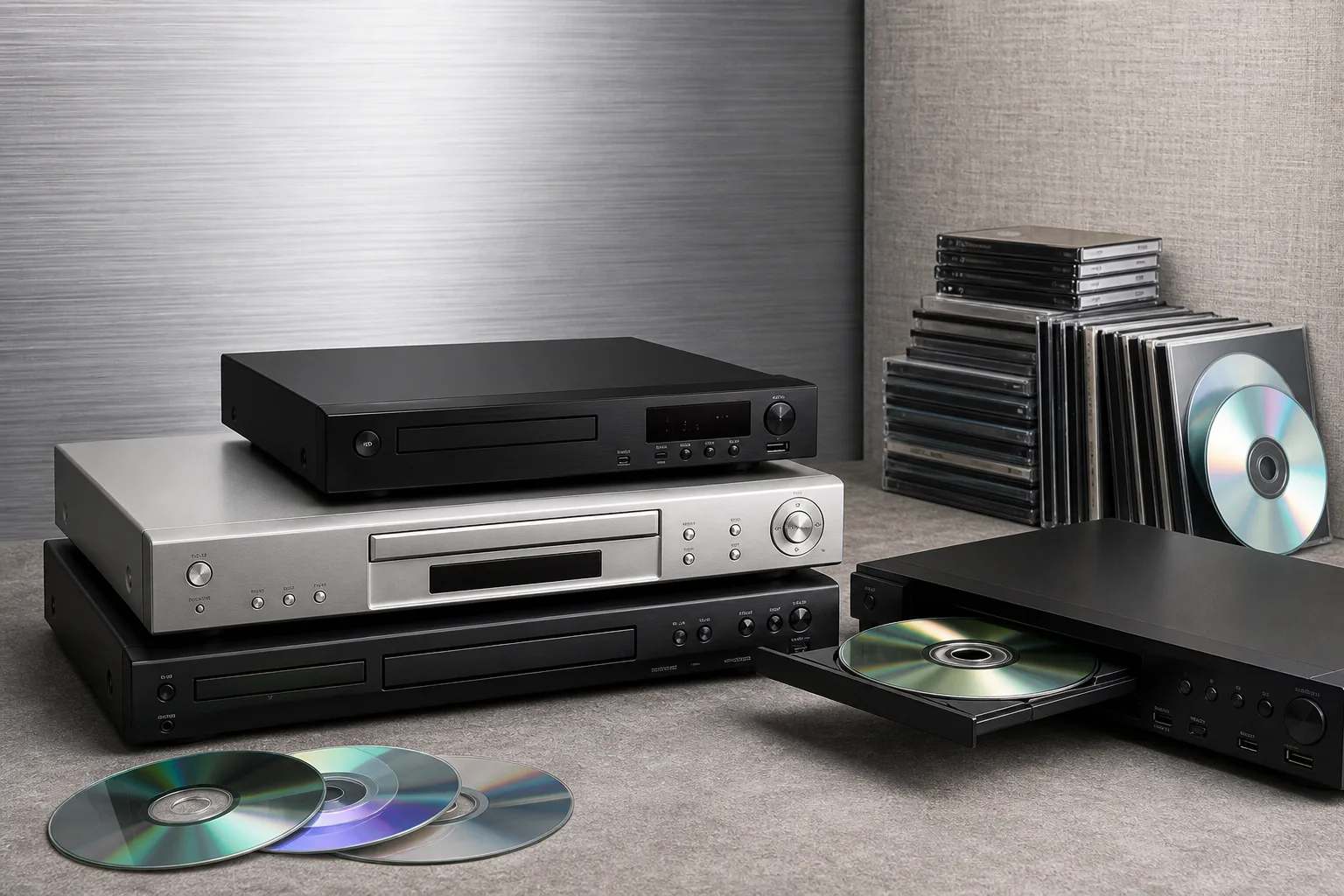
The retail sale of CD and DVD players and recorders license covers standalone disc players, DVD and Blu-ray recorders, combo units, and related playback hardware. It does not cover repair services, blank media, streaming devices, or broad consumer electronics wholesale — add those as separate activity codes if needed.
Target B2B Buyers, Not Mass Consumers
The consumer market for disc players has shrunk, but hotels, education providers, government archives, AV integrators, and religious institutions still procure this hardware regularly. Focusing on these durable B2B segments gives you more predictable margins than chasing retail foot traffic.
Leverage Dubai's Re-Export Trade Advantage
Dubai's position as a regional trading hub means buyers in sub-Saharan Africa, South Asia, and parts of the GCC still source disc hardware through UAE-based traders. If you are importing from Asian manufacturers and moving product onward, a free zone structure is well suited to that model.
Choose Between Mainland and Free Zone Carefully
Mainland setup gives you direct access to UAE retail and B2B customers without a distributor, while Meydan Free Zone offers 100% foreign ownership, 0% corporate tax on qualifying income, and flexible office options. Let your target customer base drive the decision, not setup cost alone.
Enjoy 100% Foreign Ownership Through Meydan Free Zone
Meydan Free Zone allows full foreign ownership of your company without requiring a local partner. This makes it a clean, straightforward structure for international entrepreneurs sourcing and trading disc hardware through the UAE.
Know Your Tax Obligations Before You Launch
Free zone businesses pay 0% corporate tax on qualifying income, and there is no personal income tax in the UAE. However, VAT at 5% applies and registration becomes mandatory once your annual turnover exceeds AED 375,000, so factor that into your pricing and cash flow planning early.
Add Complementary Activity Codes at Application Stage
If your business model touches areas like servicing, media sales, or streaming hardware, flag those needs when you apply rather than after setup. Meydan Free Zone supports over 2,500 business activities, making it straightforward to include additional codes from the start.
How to Start a Retail Sale of CD and DVD Players and Recorders Business in Dubai with Meydan Free Zone
Physical media hardware still moves in the UAE. B2B buyers, hospitality fit-outs, and a steady import-export trade across the Gulf and wider region keep demand alive. This is not a mass-market consumer play, but it is a real, licensable trade activity with workable margins if you know your buyers.
This guide covers what the retail sale of CD and DVD players and recorders license covers, who buys this equipment, how to pick the right jurisdiction, and how to set up through Meydan Free Zone.
Key Stats at a Glance
| Activity | Retail Sale of CD and DVD Players and Recorders |
|---|---|
| License category | Commercial |
| Foreign ownership | 100% via Meydan Free Zone – Foreign Ownership rules apply |
| Corporate tax | 0% on qualifying free zone income – Federal Tax Authority (FTA) |
| Personal income tax | None |
| VAT | 5% standard rate; registration required once turnover exceeds AED 375,000 – Federal Tax Authority (FTA) |
| UAE consumer electronics market | Steady regional demand driven by B2B procurement, hospitality, and re-export trade – Statista |
| Setup jurisdiction | Meydan Free Zone, Dubai |
What This License Covers and Who Buys This Equipment

The retail sale of CD and DVD players and recorders license covers the buying and selling of standalone disc players, DVD and Blu-ray recorders, combo units, and related playback hardware. You are selling physical equipment, not content, not software, and not streaming devices.
The scope is specific. It does not cover repair and maintenance of this equipment, the sale of blank or pre-recorded media, or the retail of smart TV boxes and streaming sticks. If you want to add those activities, you need to include them separately when you apply.
Who actually buys this hardware
The consumer market for standalone disc players has shrunk, but B2B demand is more durable than most people assume. The buyers worth targeting are:
- Hotels and serviced apartments fitting out rooms with in-room entertainment systems
- Education providers that still use disc-based learning materials
- Government and corporate archives that need reliable recording hardware for document and media preservation
- AV integrators supplying boardrooms, training centres, and conference facilities
- Religious institutions and community centres that distribute content on physical media
Export and re-export trade
Dubai's position as a trading hub makes re-export a real part of this business. Buyers in sub-Saharan Africa, South Asia, and parts of the wider GCC still procure disc hardware through Dubai-based traders. If you are sourcing from manufacturers in Asia and moving product through the UAE to these markets, a free zone setup gives you a clean structure for that trade.
What the license does not cover
Be clear on the boundaries before you apply. This license does not cover:
- Repair, servicing, or technical maintenance of players and recorders
- Software or firmware for disc players
- Streaming hardware such as media players and smart sticks
- Wholesale of consumer electronics as a broad category
If your business model touches any of those areas, flag it when you select your activity codes. Meydan Free Zone supports over 2,500 business activities, so adding a complementary code is usually straightforward at the application stage.
Mainland vs Meydan Free Zone: Which Setup Suits You
This is the biggest choice you will make when setting up. Let your customers decide it, not the cost comparison.
| Factor | Mainland (DET) | Free Zone (Meydan Free Zone) |
|---|---|---|
| Foreign ownership | 100% permitted in most commercial activities | 100% always |
| UAE retail market access | Direct – sell to any UAE customer without restriction | Requires a local distributor or customs entry for mainland sales |
| Office requirement | Physical office address required | Flexi-desk options available |
| Best suited to | Retail shopfront, direct UAE consumer or B2B sales | Export, re-export, online trade, B2B supply via distributors |
| Corporate tax | 9% on taxable profits above AED 375,000 | 0% on qualifying free zone income |
| Setup cost | Generally higher due to office and DET fees | Lower entry cost; Dubai Trade License from AED 12,500 |
Mainland via DET
A mainland license from Dubai's Department of Economy and Tourism lets you sell directly to any customer in the UAE, walk-in retail or B2B contract. You need a physical office address, and you are subject to the standard 9% corporate tax rate on profits above AED 375,000. If you are opening a shop or supplying UAE businesses directly without a distributor in the middle, mainland is the right structure.
Meydan Free Zone
A Meydan Free Zone license works well if your model is export-focused, you are trading online, or you are supplying UAE buyers through a local distributor. You get 100% ownership, a lower cost base, and flexi-desk options that keep your overheads down while you build the business. You can also set up your business remotely without needing to be in Dubai for the process.
The customs point to understand
When you sell from a free zone into the UAE mainland, the goods go through a customs entry process and standard import duties apply. For most electronic hardware, that is 5% customs duty. Factor this into your pricing if mainland B2B sales are part of your plan. It is not a barrier, but it is a cost that affects your margin calculations.
Free Business Setup Cost Calculator
Calculate NowStep-by-Step Setup Guide with Meydan Free Zone
The process is direct. Here is what to expect from start to license in hand.
- Step 1, check and book your trade name: Use the Company Name Check tool to confirm your preferred name is available. Names must meet UAE naming rules: no offensive terms, no references to political or religious bodies, and no names that imply a government connection. Book the name through the Meydan Free Zone portal once confirmed.
- Step 2, select your activity code: Confirm the correct activity code for retail sale of CD and DVD players and recorders before you proceed. If you plan to add complementary activities such as wholesale or export trading, include them at this stage. Adding activities later is possible but costs extra time and fees.
- Step 3, choose your company structure: Most sole founders set up as a Free Zone Establishment (FZE). If you have two or more shareholders, a Free Zone Company (FZC) is the standard structure. Both give you 100% foreign ownership.
- Step 4, pick your office package: Meydan Free Zone offers flexi-desk options that satisfy the registered address requirement without committing to a full office lease. If you need a dedicated space for stock handling or client meetings, dedicated desk and office options are available. The meeting rooms in Dubai available through mAssist are useful if you need a professional space for client presentations without a permanent office.
- Step 5, submit your documents: Standard requirements are a passport copy, a recent passport-sized photograph, and a completed application form. You do not need a UAE residence visa to apply. Meydan Free Zone will confirm if any extra documents are needed for your specific structure.
- Step 6, pay your fees and get your license issued: Once documents are approved and fees are paid, your license is issued. You will receive your trade license, certificate of incorporation, and memorandum of association.
- Step 7, open a UAE corporate bank account: A UAE business bank account is needed before you can trade, receive payments, or pay suppliers. Banking for free zone companies takes time. Meydan Free Zone's business banking support through mCore helps you prepare the right documents and approach the right banks for your business profile.
- Step 8, arrange import and supplier agreements: Register with UAE Customs if you are importing hardware. Get your HS codes confirmed for CD and DVD players and recorders. Set up supplier contracts and agree on delivery terms, especially if you are sourcing from manufacturers in Asia.
Compliance, Costs, and What You Need Before You Start
Getting licensed is step one. Staying compliant is the ongoing job. Here is what you need to have in place.
Customs registration
If you are importing electronic hardware into the UAE, you need a customs registration number. You also need to confirm the correct HS codes for your products. The Ports, Customs and Free Zone Corporation (PCFC) handles customs registration for free zone businesses in Dubai. Get this sorted before your first shipment arrives.
VAT registration
VAT in the UAE is 5%. You must register for VAT once your taxable turnover reaches AED 375,000. Voluntary registration is possible from AED 187,500. If you are selling to UAE mainland customers, VAT applies to those sales. Meydan Free Zone's VAT registration support through mAccounting can handle this for you. The Federal Tax Authority (FTA) sets the rules and runs the registration portal.
Corporate tax
Free zone companies pay 0% corporate tax on qualifying income. To keep that status, you need to meet the qualifying free zone person criteria set by the FTA. This includes maintaining adequate substance in the free zone and not earning income from excluded activities. Check the FTA's guidance or use corporate tax services in Dubai through mAccounting to stay on the right side of this.
Annual license renewal
Your Meydan Free Zone license renews annually. Missing the renewal deadline triggers penalties and can suspend your ability to trade. Set a reminder 60 days before your renewal date. A compliance review can be triggered if your activity changes, your ownership structure shifts, or your registered address lapses.
Practical costs to plan for
- License fee: starts from AED 12,500 depending on your package and activity selection
- Flexi-desk or office package: varies by tier; confirm current rates with Meydan Free Zone directly
- Visa allocation: each license package comes with a set visa quota; extra visas are available at an extra cost
- Bank account setup: no fixed fee, but allow four to eight weeks for the process and have your business plan and financial projections ready
- Customs registration: a one-time setup cost; confirm current fees with PCFC
- VAT registration: no government fee, but factor in the cost of ongoing VAT filing if you are doing it yourself or using an accountant
Use the business cost calculator on the Meydan Free Zone website to get a working estimate before you commit to anything.
Conclusion
The retail sale of CD and DVD players and recorders is a workable trade activity in the UAE, particularly for businesses targeting B2B buyers and regional export markets. The consumer market has contracted, but the B2B and re-export opportunity is real and largely underpopulated by well-organised operators.
Meydan Free Zone gives you a simple, cost-effective path to get licensed and operating. You get 100% ownership, a low-cost entry structure, and the flexibility to run the business from outside the UAE if needed. The setup process is direct, the compliance duties are manageable, and the jurisdiction is credible with suppliers and banking partners.
Speak to the Meydan Free Zone team to confirm your activity code, get a cost breakdown, and start your application.
Ready to Launch Your Business in Dubai?
Let's ConnectReferences
- Federal Tax Authority (FTA), UAE
- Ports, Customs and Free Zone Corporation (PCFC)
- Statista
- Invest in Dubai



.jpeg)