
Table of Contents
Frequently Asked Questions
What is activity code 7730.70 and what does it cover
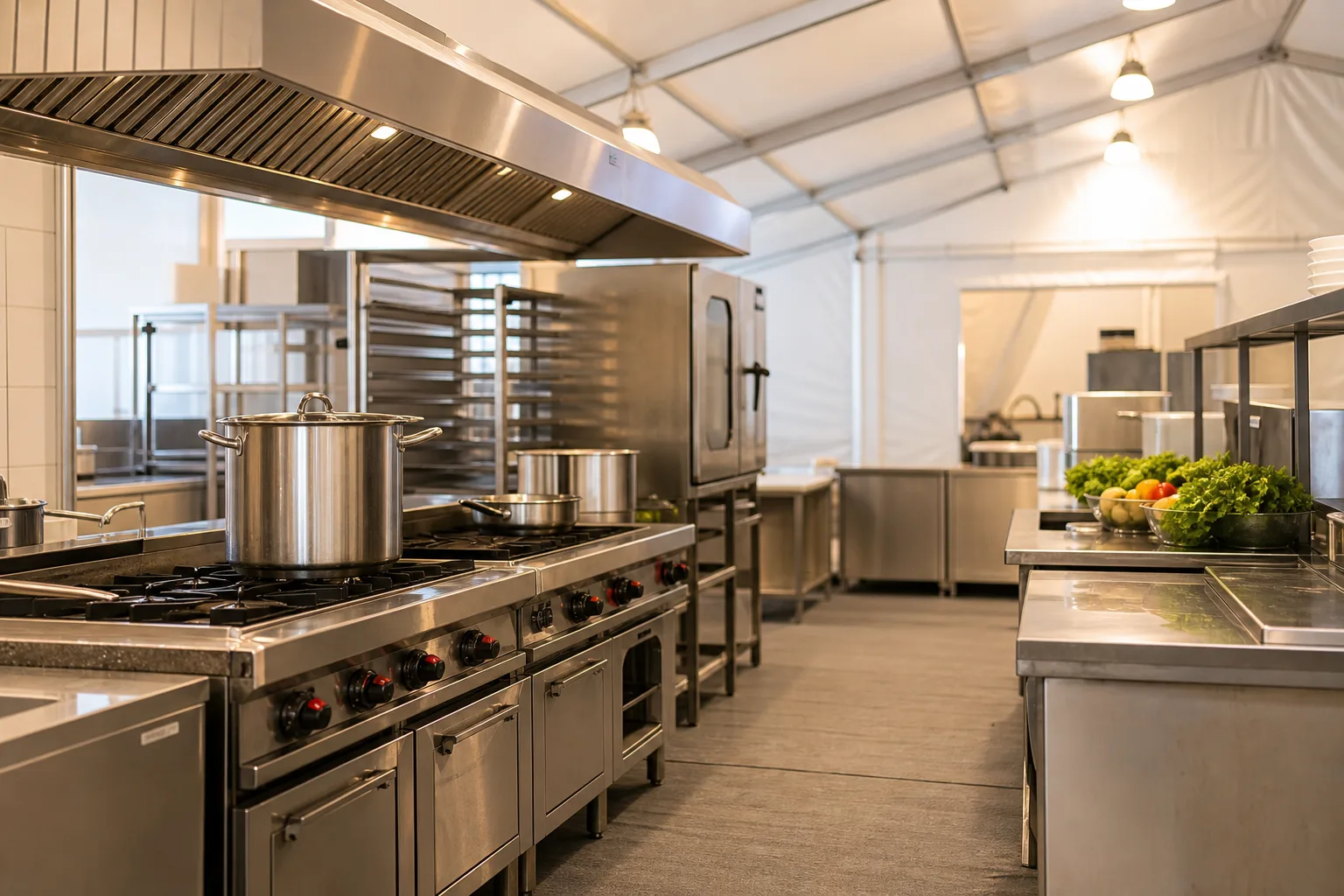
Activity code 7730.70 covers the rental and leasing of temporary kitchen units, including modular, containerised, or trailer-mounted commercial kitchen equipment deployed on a short-term basis.
Importantly, this classification is for infrastructure rental, not catering. The business provides the kitchen units; clients supply their own food and staff. This distinction keeps the activity within the commercial rental and leasing category rather than the food service sector.
Who are the typical customers for a temporary kitchen rental business in Dubai
Customers come from a wide range of sectors, each with different hire durations and compliance requirements. Core client groups include event organisers, construction camp operators, film and TV productions, catering companies covering a fit-out gap, and F&B brands trialling a new location before committing to a permanent build-out.
This diversity creates natural pricing tiers — a one-day event hire is priced very differently from a six-month construction camp contract — which supports a flexible and resilient revenue model.
What revenue model works best for a temporary kitchen rental business
The core model is rental-based pricing structured as daily, weekly, or monthly hire agreements. Optional bundled services — including delivery, installation, and ongoing maintenance — can be layered on top.
Margins improve significantly when logistics and servicing are priced into the contract from the outset rather than handled as ad-hoc charges. Bundling also reduces administrative friction and makes contracts easier to renew.
Why is demand for temporary kitchen rentals in Dubai considered consistent year-round
Dubai's construction workforce exceeds one million people, and construction camp catering compliance is enforced by MOHRE (Ministry of Human Resources and Emiratisation), creating regulation-driven demand for certified kitchen units regardless of season or economic cycle.
Beyond construction, Dubai hosted over 400 MICE events in 2023, each requiring temporary catering infrastructure, and the film and TV production sector generates recurring short-term rental contracts. According to the Dubai Statistics Center, continued population and workforce growth sustains this baseline demand.
What is the competitive landscape for formalised temporary kitchen rental in Dubai
Formalised temporary kitchen rental remains a thin competitive field. Most temporary kitchen solutions in Dubai are assembled informally — borrowed equipment, repurposed trailers, or general hire companies filling a brief without food-grade specialisation.
A dedicated operator with food-grade certified units, proper contracts, and reliable logistics occupies a defensible niche. The gap between growing demand and formalised supply represents the core market opportunity for a new entrant.
Should a temporary kitchen rental business set up on the Dubai Mainland or in a Free Zone
Mainland (DED) provides unrestricted access to clients across Dubai and the wider UAE. Setup requires trade name reservation, initial approval, an Ejari-registered tenancy contract, and final licence issuance through DED e-Services. It suits operators whose clients are spread across construction sites, event venues, and commercial districts.
Meydan Free Zone offers a faster route — typically three to five working days — with 100% foreign ownership, no Ejari requirement for flexi-desk packages, and UAE-wide commercial rights under current regulations. For a fleet-based rental business where physical office space adds limited value, this is often the more practical and cost-effective starting point.
Are there regulatory clearances required beyond the trade licence
Yes. If kitchen units will be used for active food preparation by clients, the Dubai Health Authority (DHA) may require unit compliance certificates. The article advises clarifying the scope of your rental offering with DHA before signing your first contract, as the compliance obligation may sit with the client, the operator, or both depending on the arrangement.
Construction camp deployments also fall under MOHRE compliance requirements, which effectively mandates the use of certified kitchen infrastructure — making regulatory adherence both a legal obligation and a commercial differentiator.
Why is activity code 7730.70 classified as commercial rather than industrial, and why does that matter
Activity code 7730.70 is classified as a commercial activity — rental and leasing — rather than an industrial one. This removes the need for factory approvals, industrial zone tenancy, or manufacturing permits that would otherwise apply to businesses producing or fabricating equipment.
The practical result is a cleaner and faster setup process. Entrepreneurs can proceed through standard commercial licensing channels without the additional regulatory layers associated with industrial classifications, reducing both time to launch and initial compliance costs.
Setup a Temporary Kitchens Rental Business in Dubai
A labour camp feeding a thousand workers needs a compliant kitchen. A festival running four days needs six of them. A restaurant group waiting on a fit-out needs one for three months. None of those clients wants to buy a kitchen, and most of them are currently making do with something improvised.
This guide covers what activity code 7730.70 lets you do, why it is simpler to license than it looks, and where the demand actually comes from. You supply the infrastructure. The client brings the food and the staff.
Key Stats at a Glance

What This License Covers
Activity code 7730.70 covers the rental and leasing of temporary kitchen units: modular, containerised or trailer-mounted commercial kitchen equipment deployed short term.
The line that shapes the whole business is that this is not catering.
You provide the infrastructure and your clients bring their own food and staff, which keeps the activity inside commercial rental and leasing rather than food service.
That has a practical benefit most founders miss. Because the code is commercial rather than industrial, you do not need factory approvals, industrial zone tenancy or manufacturing permits.
Setup runs through standard commercial channels, which is faster and cheaper than the equipment itself suggests.
Who Your Clients Will Be
Five buyer types, with very different hire lengths:
- Event organisers running one-day to one-week deployments
- Construction camp operators on multi-month contracts
- Film and TV productions on location
- Catering companies covering a fit-out gap
- F&B brands trialling a location before a permanent build
That spread is useful, because it creates natural pricing tiers. A one-day event hire is priced nothing like a six-month construction camp contract, and a business carrying both has revenue that does not collapse when one sector goes quiet.
Revenue runs as daily, weekly or monthly hire, with delivery, installation and maintenance bundled on top.
Margins improve a lot when logistics and servicing are priced into the contract from the start rather than billed ad hoc, and bundling makes contracts easier to renew.
Mainland or Free Zone
Mainland gives unrestricted access to clients across Dubai and the wider UAE, and it suits an operator whose clients are spread across construction sites, event venues and commercial districts.
A free zone is faster and cheaper, with no Ejari needed on flexi-desk packages, which makes sense for a fleet-based rental business where an office adds very little.
Your assets live in a yard, not at a desk. Let your clients decide it, not the price.
[blockCTACostCalculator]
Step by Step Setup Guide
- Step 1, pick your jurisdiction: Mainland through DET for spread-out client sites, or Meydan Free Zone for a faster and leaner start.
- Step 2, book your trade name and get initial approval: Confirm activity code 7730.70 is listed on the application.
- Step 3, sort your premises: An Ejari-registered tenancy for mainland, or a flexi-desk in a free zone. Your yard or storage for the fleet is a separate question from the license address.
- Step 4, take the trade license: Free zone issuance typically completes within three to five working days.
- Step 5, clarify your food safety scope with DHA: If units will be used for active food preparation by clients, unit compliance certificates may apply. Settle this before your first contract.
- Step 6, register for VAT and staff: With the Federal Tax Authority once taxable supplies pass AED 375,000, and with MOHRE for any technicians or drivers you employ.
Compliance and What You Need in Place
Food safety scope
Units rented for active food preparation must meet UAE food safety standards. Coordinate with the Dubai Health Authority and work to MOHAP guidance on food facility conditions.
Your rental agreement should spell out which duties transfer to the client and which stay with you as the unit owner, because that ambiguity is where disputes start.
Transport permits
Moving large modular or containerised units across Dubai needs RTA-compliant haulage permits for oversized loads.
Check the current position with the Roads and Transport Authority before you contract a logistics provider, because non-compliant transport creates liability risk and delays at site.
Turnaround and cleaning
Maintenance and deep cleaning between rentals is both a selling point and a risk control. Build it into standard contract terms with turnaround timelines and condition reporting.
Event clients work to tight schedules, and a unit that arrives clean and certified on time earns a premium over the informal alternative.
Staff
Installation technicians and drivers go through MOHRE, and their job categories should match the work they actually do. Misclassified roles cause problems during inspections.
Insurance
Equipment cover for units in transit and on site is not legally mandated but is commercially essential. Price the premiums into your rates from the outset.
Market Opportunity
The demand base here is regulation-driven rather than discretionary.
Dubai's construction workforce exceeds one million people, and camp catering compliance is enforced by MOHRE, which effectively mandates certified kitchen infrastructure whatever the season or the economic mood.
Events add a second stream on top. Dubai hosted over 400 MICE events in 2023, each needing temporary catering infrastructure, and the film and TV production sector generates recurring short-term contracts.
Population and workforce growth tracked by the Dubai Statistics Center keeps the underlying base expanding.
The opening sits in the gap between that demand and formalised supply. Most temporary kitchen solutions in Dubai are assembled informally: borrowed equipment, repurposed trailers, general hire companies filling a brief without food-grade specialisation.
A dedicated operator with certified units, proper contracts and reliable logistics holds a position those competitors cannot match, because the compliance-driven clients cannot use them.
Conclusion
Temporary kitchen rental sits where events, construction and food and beverage overlap, and all three have long-term growth built into Dubai's development plans.
The license is short under 7730.70, the field is underformalised, and your capital sits in fleet size rather than regulatory overhead.
Get the jurisdiction right for where your clients are, price the model to cover logistics and compliance properly, and the contracts renew themselves.
The operators who formalise this space early, with certified units and clean paperwork, will set the pricing that everyone who follows has to work against.
[blockCTAContact]
References
- Dubai Statistics Center
- IMARC Group
- Visit Dubai
- Dubai Film and TV Commission
- Ministry of Human Resources and Emiratisation (MOHRE)
- Dubai Department of Economy and Tourism
- Dubai Health Authority
- Federal Tax Authority
- Ministry of Health and Prevention (MOHAP)
- Roads and Transport Authority