

Table of Contents
Topic Summary
Tap Into a Booming Global Jet Fuel Market
The global jet fuel market was valued at USD 195.21 billion in 2025 and is forecast to reach USD 354.41 billion by 2031, growing at a CAGR of 10.35 percent. Starting a jet fuel supply business now positions you at the front of a decade of strong demand growth.
Dubai's Airport Volume Is Unmatched Globally
DXB recorded 95.2 million passengers and 454,800 flight movements in 2025, making it the busiest international airport on the planet. That volume translates directly into a massive and consistent customer base for any jet fuel supplier operating in the region.
Understand What the Business Actually Does
A jet fuel supply services business sources aviation turbine fuel and operational materials, contracts them to airlines on spot, term, or index-linked deals, and routes delivery through licensed into-plane fuellers. Revenue comes from the buy-sell spread plus fees for contract structuring, hedging, and operational services.
Know Which Operators You Can Serve
Your licensed activity covers scheduled passenger carriers, cargo airlines, regional operators, and business aviation companies needing contracted fuel supply. You can also supply turbine oils, hydraulic fluids, de-icing fluids, and other operational materials beyond jet fuel alone.
Choose the Right License Activity Code
Activity code 4661.93 covers jet fuel supply services in Dubai, licensing your business to supply fuel, lubricants, and operational materials to air transport companies. Getting the correct activity code from the start ensures your contracts and operations remain fully compliant.
Meydan Free Zone Offers Key Structural Advantages
Meydan Free Zone provides 100 percent foreign ownership, zero corporate tax on qualifying income, full profit repatriation, and a fully digital licensing process. These features make it a cost-efficient and straightforward base for launching a jet fuel supply operation in Dubai.
Position for a Regional Airline Market Set to Double
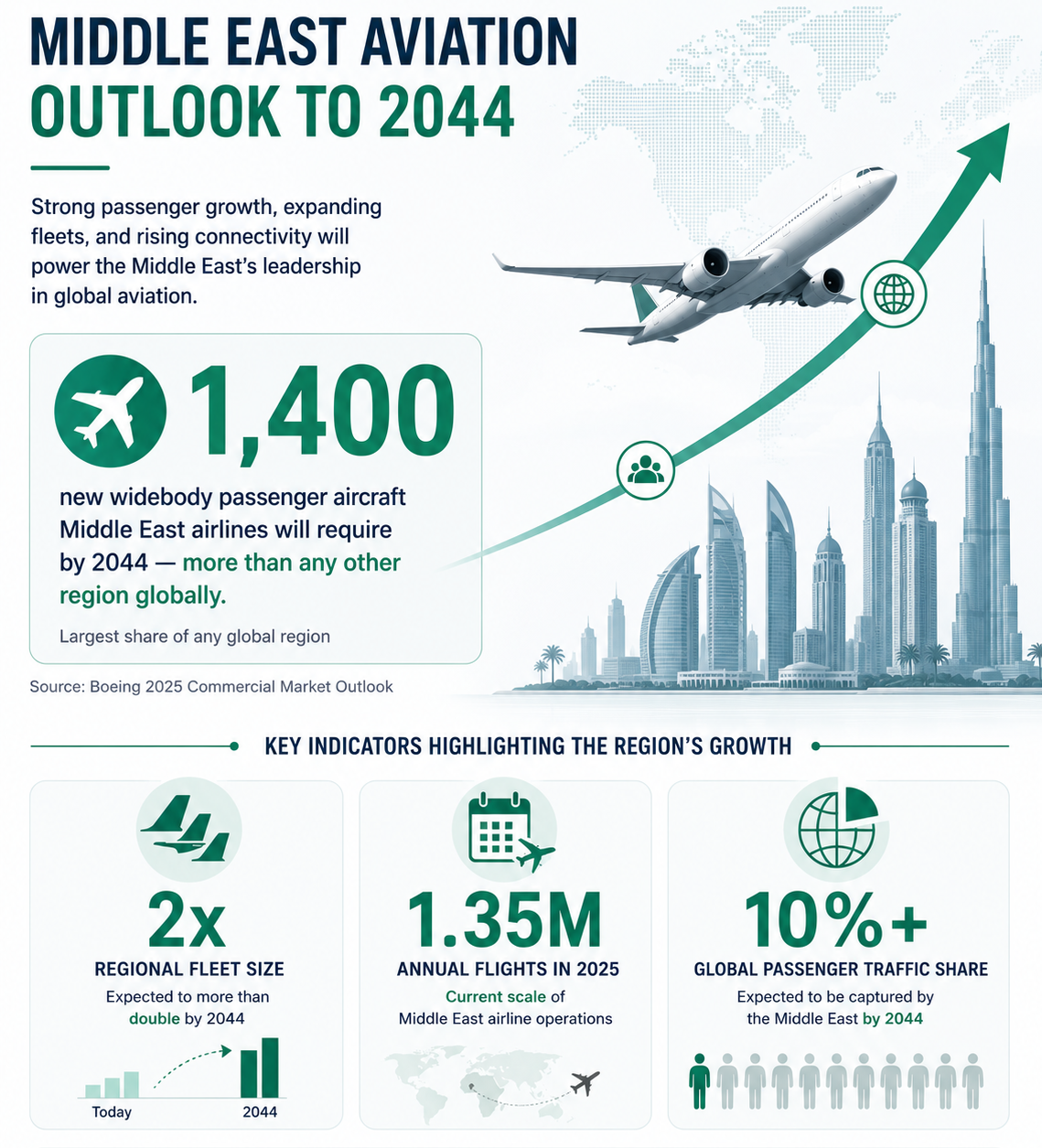
The regional airline customer base served from Dubai is forecast to double in size over the next two decades, according to Boeing's Commercial Market Outlook. A jet fuel supplier established now can grow alongside that expansion and lock in long-term term contracts with carriers scaling their networks.
How to Start a Jet Fuel Supply Services Business in Dubai with Meydan Free Zone
An Emirates A380 pushes back from DXB bound for London, tanks full. A flydubai 737 follows for Istanbul. A 777 freighter at DWC takes on fuel and lubricant for its night run to Liege. A regional carrier at Sharjah signs a monthly supply contract for Jet A-1. None of those flights leave the gate without somebody having sourced the fuel, set the price, and lined it up for delivery. A jet fuel supply services business is that desk.
Jet fuel is one of the world's most actively traded fuel products, and the supply side is sizable. The global jet fuel market was worth USD 195.21 billion in 2025 and is forecast to reach USD 354.41 billion by 2031, at a compound annual growth rate of 10.35 percent, with into-plane fuelling capturing 88.5 percent of the market in 2025, according to Mordor Intelligence¹. Dubai sits at the busy end of that picture.
DXB handled a record 95.2 million passengers and 454,800 flight movements in 2025, the highest annual international passenger traffic ever recorded by any airport, according to Dubai Airports². For a Dubai-licensed jet fuel supply services business, that is a market growing in double digits and a home airport at the very top of it.
A jet fuel supplier in Dubai is selling into a regional airline customer base that is forecast to double in size over the next two decades.
Picture a jet fuel supply services business at work. An Emirates Jet A-1 contract is up for renewal at DXB. A new flydubai term deal is being structured around index-linked pricing. The cargo team is finalising a lubricant top-up for a freighter visit at DWC, and a regional carrier wants a quote on turbine oil for its annual mix.
Each contract is sourced, priced against jet fuel benchmarks, hedged where useful, and routed to the apron through licensed into-plane fuellers. The supplier earns on the spread, plus value-added service revenue.
Whether it is Jet A-1 by the tanker, lubricant by the barrel, or a multi-airline annual supply contract, a jet fuel supply services business is the desk that puts fuel and operational materials into the airline's hands.
Who is this for?
- Jet fuel supply traders: Businesses contracting Jet A-1 and other aviation turbine fuels into commercial and cargo airlines, on spot, term, or index-linked deals.
- Aviation lubricants and operational materials suppliers: Operators supplying turbine oils, hydraulic fluids, de-icing fluids, and other operational materials to air transport companies.
- Multi-airline aviation supply houses: Firms running broader aviation supply contracts that bundle fuel, lubricants, and operational materials across an airline's network.
Meydan Free Zone offers 100% foreign ownership, zero percent corporate tax on qualifying income, full profit repatriation, and a fully digital licensing process. It is a regulated, cost-efficient base for a jet fuel supply services business, in a country with the world's busiest international airport, two of the planet's largest long-haul airlines, and the supply network that fuels them.
Your All-in-One Solutions for Business Setup in Dubai
Explore Meydan Plus4661.93 - Jet Fuel Supply Services
Under this activity, your business is licensed to supply fuel, lubricants, and other operational materials to air transport companies.
A jet fuel supply services business is the supplier between refiners and the airlines that need fuel to fly. The work is to source aviation turbine fuel and operational materials, contract them to airlines on spot, term, or index-linked terms, and route delivery through licensed into-plane fuellers at the airport.
The clients are airlines: scheduled passenger and cargo carriers, regional and business aviation, and any air transport company needing a contracted fuel supply. It is a margin and service business, where the supplier earns on the buy-sell spread plus contract structuring, hedging, and operational services.
| Products | Sourcing & Contracting | Buyers | The Business |
|---|---|---|---|
| Aviation fuel, lubricants, and operational materials. Examples: Jet A-1 and Jet A turbine fuels, turbine oils, hydraulic fluids, de-icing fluids, and fuel additives. | Sourcing from refiners and pricing against benchmarks, on spot, term, or index-linked deals. Examples: a multi-year Jet A-1 term with a long-haul carrier, a monthly index-linked supply to a regional airline, or a one-off uplift for a freighter visit. | Air transport companies of all kinds. Examples: scheduled passenger airlines, cargo and freighter operators, regional and low-cost carriers, business aviation, and government accounts. | Margin business with services revenue on top. Examples: a fuels desk on spread plus hedging fees, a lubricants supplier on product margin and logistics, or a full-service house bundling fuel, oil, and de-icer into one contract. |
| GLOBAL MARKET | MARKET FORECAST | DXB TRAFFIC | FLIGHT MOVEMENTS |
|---|---|---|---|
| Global jet fuel market worth USD 195.21 billion in 2025¹. | Global jet fuel market forecast to reach USD 354.41 billion by 2031¹. | DXB handled 95.2 million passengers in 2025, a world record². | DXB recorded 454,800 flight movements in 2025². |
This activity is for the commercial supply of jet fuel, lubricants, and similar materials to air transport companies. Separate activities cover the rest of the chain: operating into-plane fuelling vehicles or airside storage and hydrant infrastructure, supplying fuel for non-aviation uses, and trading aviation fuel as a paper position with no airline supply.
If your business contracts and supplies fuel and materials to airlines, you are in. If you run airside fuelling infrastructure, supply fuel to other users, or trade aviation fuel without airline customers, a different activity applies.
Third-Party Approval
Yes. Pre-approval from the Dubai Civil Aviation Authority (DCAA) is required before a license is issued by Meydan Free Zone.
Anti-Money Laundering Compliance
This business activity is exempt from AML compliance requirements.
Ready to Launch Your Business in Dubai?
Let's ConnectCitations
¹ Mordor Intelligence. Jet Fuel Market Size, Share, Trends. Mordor Intelligence, 2026.
² Dubai Airports. DXB Sets Global Benchmark as Record Traffic Become the Norm. Dubai Airports, 2026.