
Table of Contents
Frequently Asked Questions
What does activity code 4781.98 (Beverages Canteen licence) actually authorise
Activity code 4781.98 authorises the retail sale of non-alcoholic beverages from a fixed or semi-fixed canteen unit. It is designed for structured beverage service points rather than full-service restaurants or catering companies.
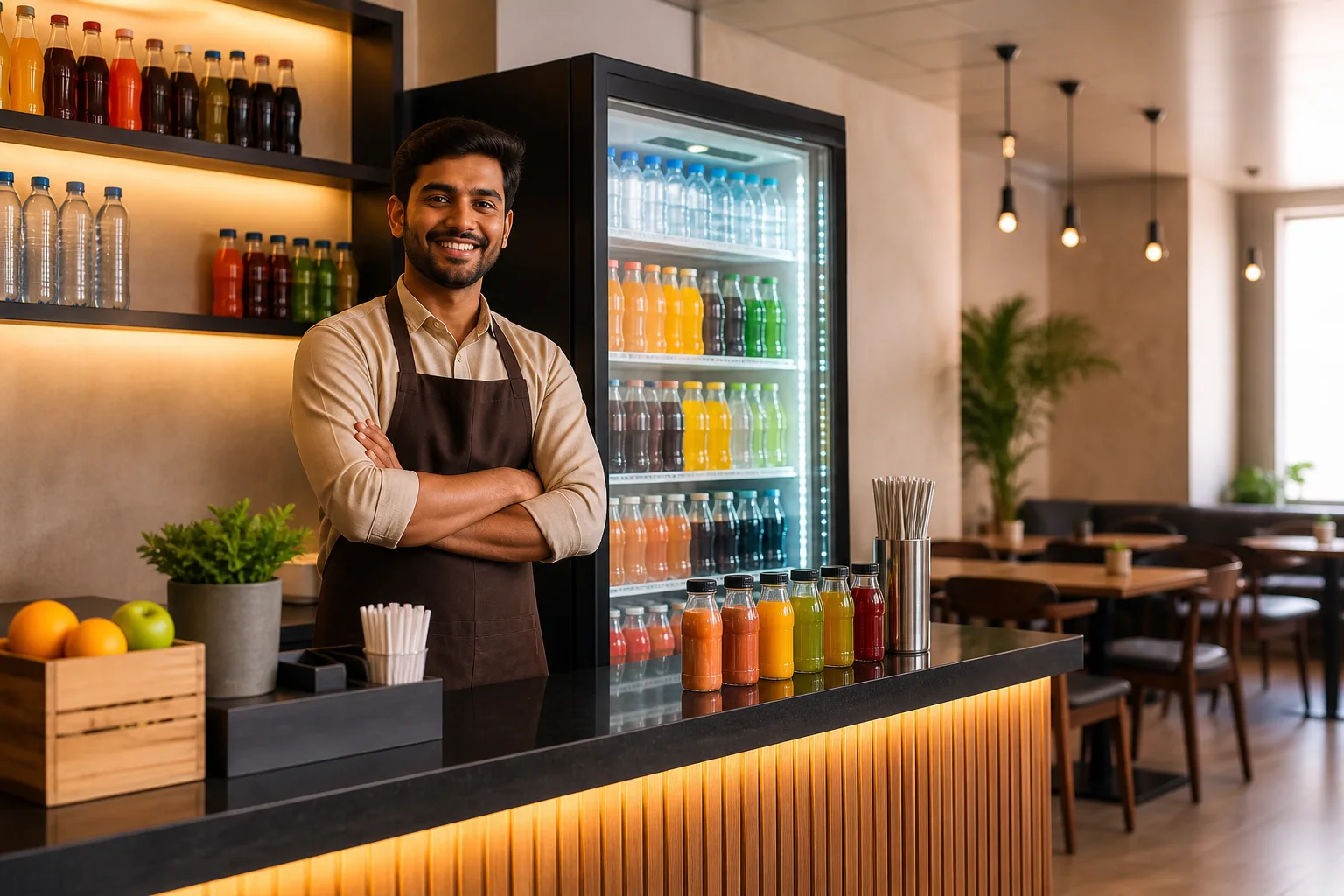
Typical formats include workplace canteens, kiosk-style setups inside office buildings or industrial facilities, and institutional catering points in schools, hospitals, or logistics hubs. Products in scope include juices, bottled water, hot drinks, soft drinks, and packaged beverages in both ambient and chilled categories.
The licence does not cover the sale of alcohol, full-service restaurant operations, or any form of food or beverage manufacturing. Operators who want to serve food alongside beverages, or produce their own products, will need additional or alternative activity classifications.
Who is the Beverages Canteen licence best suited for
The licence suits entrepreneurs and businesses looking for a lower-capital entry point into Dubai's food and beverage sector. Because it sits within the retail trade classification rather than full F&B, the compliance and setup requirements are comparatively streamlined.
It is particularly well matched to operators targeting captive audiences — such as a workforce in a free zone, industrial corridor, or institutional campus — where reliable, recurring footfall reduces demand uncertainty. It also suits founders who want to test a location before scaling incrementally across multiple sites.
What are the key advantages of setting up through Meydan Free Zone
Meydan Free Zone offers two notable structural benefits for Beverages Canteen operators: no minimum paid-up capital requirement and 100% foreign ownership. This makes it accessible to international founders who do not want to take on a local partner or commit significant capital before trading.
Free zone licences also typically come with a straightforward incorporation process, making them a practical choice for operators who want to move quickly from application to trading.
What food safety and regulatory requirements apply to a beverage canteen in Dubai
Beverage retail in Dubai falls under the food safety framework administered by the Dubai Health Authority (DHA). Operators must comply with food handling, hygiene, and storage standards applicable to their specific canteen format.
Depending on the location and scale of operations, a food establishment permit from DHA or the relevant municipal authority may be required in addition to the trade licence. Operators should confirm which permits apply to their chosen site before committing to a lease.
Do Beverages Canteen operators in Dubai need to register for VAT
F&B retail is a standard-rated supply under UAE VAT. Businesses with taxable turnover exceeding AED 375,000 annually are required to register with the Federal Tax Authority (FTA) and file returns accordingly.
Voluntary VAT registration is available from AED 187,500 in taxable turnover, which can be advantageous for reclaiming input tax on setup costs. Operators should factor VAT compliance into their pricing model and accounting processes from the outset.
How large is the market opportunity for non-alcoholic beverage retail in Dubai
The UAE non-alcoholic beverages market is projected to grow steadily through 2028, supported by population growth, health-conscious consumption trends, and a strong tourism base. According to Statista, the segment generates substantial annual revenues with consistent medium-term growth forecast.
Dubai welcomed over 17 million international visitors in 2023, according to the Department of Economy and Tourism, sustaining F&B retail demand across malls, transport terminals, and leisure venues. High-density demand zones include free zones such as Jebel Ali and Dubai South, industrial areas in Al Quoz and Ras Al Khor, and institutional campuses such as schools, hospitals, and logistics hubs.
What locations in Dubai are most suitable for a Beverages Canteen operation
The strongest locations share one characteristic: a captive workforce or visitor population that generates reliable, recurring footfall without heavy reliance on passing trade. Prime examples include free zones such as Jebel Ali and Dubai South, and industrial corridors in Al Quoz and Ras Al Khor.
Institutional campuses — schools, hospitals, and logistics hubs — are also highlighted as high-demand zones. Beyond these, retail malls, transport terminals, and leisure venues benefit from the sustained growth in tourist numbers that Dubai continues to record year on year.
Can a Beverages Canteen licence be expanded to cover food service or beverage manufacturing
Not under activity code 4781.98 alone. The Beverages Canteen licence is specifically scoped to the retail sale of non-alcoholic beverages and does not extend to full-service restaurant operations or any form of food or beverage manufacturing.
Operators who intend to serve food alongside beverages, or who plan to produce their own drinks, will need additional or alternative activity classifications. It is advisable to confirm the correct combination of licence activities with your free zone or licensing authority before commencing operations to avoid compliance issues.
How to Open a Beverages Canteen in Dubai
A canteen serving drinks to a workforce that is already on site does not need to win customers. They are there every day, and they get thirsty.
Activity code 4781.98 licenses that business. It sits in retail trade rather than full food and beverage, which makes the setup lighter and the capital demand lower than a restaurant license. This guide covers what it permits, where the boundaries are, and how the model works.
Key Stats at a Glance

What This License Covers
Code 4781.98 authorises the retail sale of non-alcoholic beverages from a fixed or semi-fixed canteen unit. It is designed for structured beverage service points rather than restaurants or catering companies.
Typical formats
- Workplace canteens
- Kiosk-style setups inside office buildings or industrial facilities
- Institutional catering points in schools, hospitals or logistics hubs
Products in scope
Juices, bottled water, hot drinks, soft drinks and packaged beverages, across both ambient and chilled categories.
Where it stops
The license does not cover alcohol, full-service restaurant operations, or any form of food or beverage manufacturing. If you want to serve food alongside drinks, or produce your own products, you need further or alternative activity codes.
That boundary is worth settling before you sign a lease. A canteen that adds sandwiches has changed what it needs to be licensed for, and discovering that after fit-out is expensive.
Who It Suits
This is a lower-capital entry point into Dubai's food and beverage sector, and it suits two kinds of operator particularly well.
The first is anyone targeting a captive audience: a workforce in an industrial corridor, an institutional campus, a large office building. Reliable recurring footfall removes most of the demand uncertainty that makes standalone F&B risky.
The second is a founder who wants to test one location before scaling. Because the license sits in retail trade rather than full F&B, the compliance and setup load is comparatively light, which makes a second and third site an operational decision rather than a fresh regulatory exercise.
[blockCTACostCalculator]
Regulatory and Compliance Considerations
Food safety
Beverage retail falls under the food safety framework administered by the Dubai Health Authority. You must comply with food handling, hygiene and storage standards appropriate to your canteen format.
Depending on location and scale, a food establishment permit from the DHA or the relevant municipal authority may be needed alongside the trade license. Confirm which permits apply to your specific site before committing to a lease, because the answer depends on where you are and what the building already holds.
VAT
Food and beverage retail is a standard-rated supply. Registration with the Federal Tax Authority is compulsory once taxable turnover passes AED 375,000 a year, with voluntary registration available from AED 187,500.
The voluntary threshold is worth a look for a new operator. Registering early lets you reclaim input tax on setup costs, which for a business fitting out a unit and buying equipment can be a meaningful sum. Build VAT into your pricing model from the start either way.
Staff
Hiring brings duties under the Ministry of Human Resources and Emiratisation: employment contracts, Wages Protection System registration and any applicable Emiratisation targets. Free zone employees are subject to specific MOHRE provisions depending on the zone's framework.
Step by Step Setup Guide
- Step 1, select your activity and confirm your trade name: Check that 4781.98 matches your intended operations, and verify name availability against UAE naming conventions.
- Step 2, choose your license package: A flexi-desk suits operators whose canteen unit sits off-site. A physical office may be appropriate if you are managing several locations or need an on-site administrative presence.
- Step 3, submit your documents and get initial approval: Once reviewed, approval is typically issued promptly, letting you move on to banking and visas.
- Step 4, open a corporate bank account and confirm visa quota: A UAE corporate account is needed for operations and for Wages Protection System purposes. Your visa quota is confirmed at this stage if you intend to hire or sponsor dependants.
What you will need
- Passport copy for each shareholder
- Completed application form and a brief business plan summary
- A no-objection letter if you currently hold UAE residency under another sponsor
Market Opportunity
A stable category
The UAE non-alcoholic beverages market is projected to grow steadily through 2028, supported by population growth, health-conscious consumption and a strong tourism base. Statista reports the segment generating substantial annual revenues with consistent medium-term growth forecast. This is one of the more stable retail categories in the region, which matters when the rest of F&B is notoriously volatile.
Where the demand concentrates
The strongest locations share one characteristic: a captive workforce or visitor population producing reliable footfall without depending on passing trade. Industrial corridors such as Al Quoz and Ras Al Khor qualify, as do institutional campuses including schools, hospitals and logistics hubs.
Beyond those, retail malls, transport terminals and leisure venues benefit from sustained visitor growth. Dubai recorded over 17 million international arrivals in 2023, and that traffic extends beverage demand well past the resident population.
Why the economics work
Relative to a full restaurant license, this category carries a considerably lower capital threshold. No minimum paid-up capital, full foreign ownership through a free zone, and a unit rather than a venue to fit out. That combination makes it practical to prove a location before committing further, which is the opposite of how most F&B entry works.
How it scales
Once one site is running profitably, the model repeats. The same license covers more units, the supply chain is already established, and the operational knowledge transfers directly. Growth becomes a question of finding the next captive audience rather than rebuilding the business each time.
Conclusion
A beverages canteen license is a simple, low-overhead entry into Dubai's food and beverage retail sector, particularly suited to founders targeting institutional or workplace locations where consistent footfall is built into the site.
The regulatory framework is clear, the capital demands are workable, and full foreign ownership makes it accessible to international founders without a prior UAE presence.
Settle two things before you commit: whether your intended menu stays inside the beverages-only scope, and which food establishment permits apply at your chosen site. Both are cheaper to resolve now than after a lease is signed.
[blockCTAContact]