
Table of Contents
Topic Summary
Understand What License Code 4773.e7 Covers
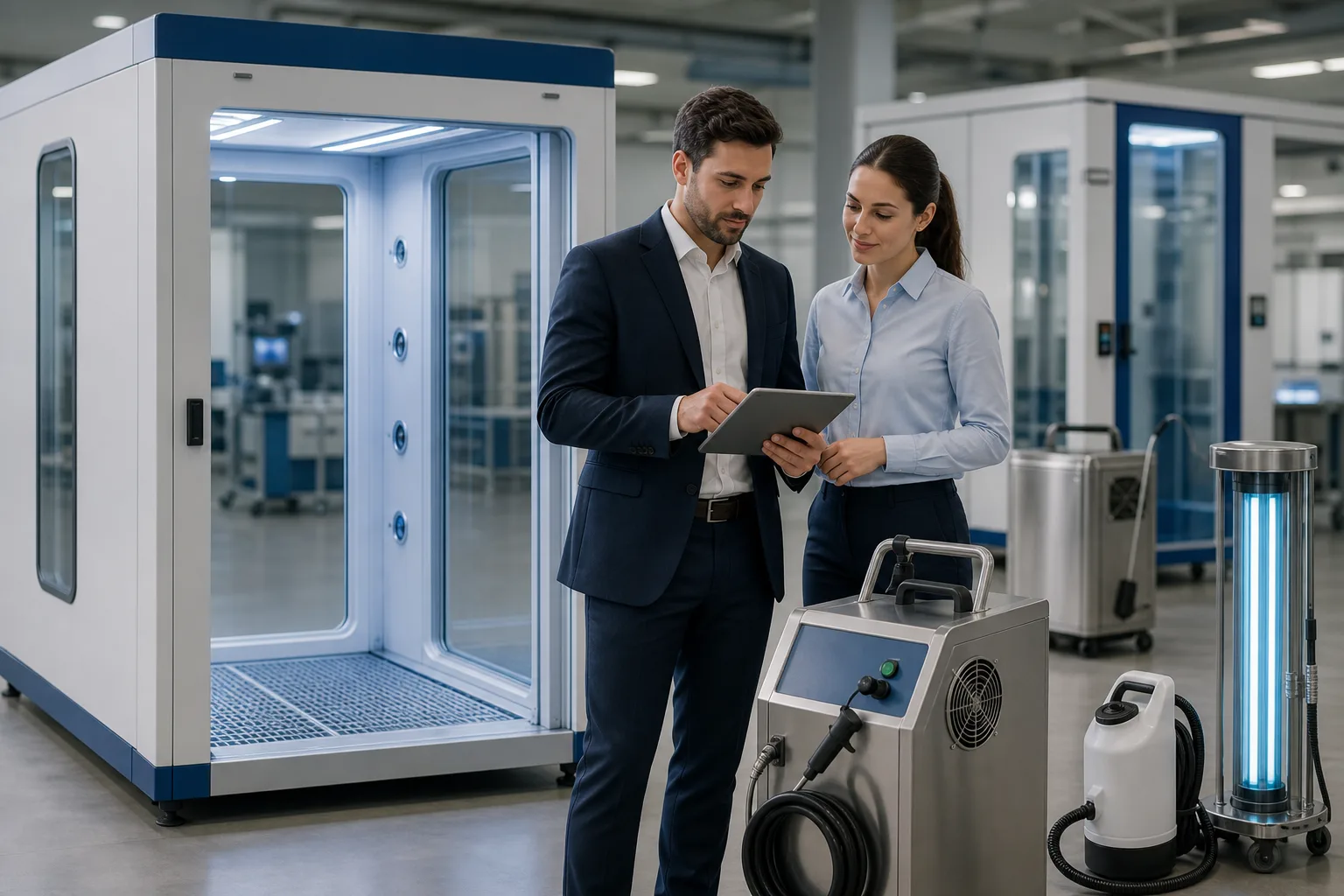
Activity code 4773.e7 authorizes the retail sale of equipment designed to disinfect people, surfaces, air, and environments using physical, chemical, or radiative methods. This broad scope includes everything from walk-through booths to UV sterilization units and surface treatment systems.
Tap Into a Fast-Growing Global Market
The global disinfection equipment market was valued at USD 8.5 billion in 2024 and is projected to reach USD 15.2 billion by 2033 at a 7.2% CAGR. The UAE market alone is expected to grow from USD 263 million in 2023 to USD 715 million by 2030.
Know Your Three Core Institutional Buyer Groups
Healthcare facilities, food and hospitality businesses, and facilities management or government entities are your primary customers. These buyers purchase disinfection equipment as a compliance requirement, making demand consistent and largely non-discretionary.
Settle the Approvals Question Before You Trade
Regulatory approvals from bodies such as the Dubai Health Authority, Dubai Municipality, and the Ministry of Health and Prevention must be confirmed before trading begins. This step applies whether you set up on the mainland or in a free zone.
Choose Between Mainland and Free Zone Setup
A mainland DET license lets you sell directly to UAE hospitals, government entities, and FM contractors without an intermediary. A Meydan Free Zone license offers 100% foreign ownership and a fully digital remote setup, but onshore sales require a local distributor.
Leverage Meydan Free Zone for Full Foreign Ownership
Meydan Free Zone allows 100% foreign ownership of your trading business, with flexible desk arrangements and remote setup options. This makes it an efficient entry point for entrepreneurs focused on import, re-export, and B2B distribution.
Align Your Product Range With Your Target Clients
The specific equipment you carry — whether UV sterilization units, chemical treatment systems, or walk-through booths — will shape your client base more than the license code itself. Matching your inventory to the compliance standards your buyers must meet is a key commercial decision.
How to Start a Disinfecting Booths and Equipment Trading Business in Dubai with Meydan Free Zone
Hospitals, food premises, schools and airports all have to disinfect, and most of them do it because a regulator says so rather than because they chose to. That makes the equipment a compliance purchase rather than a discretionary one. Activity code 4773.e7 is the license for selling it.
This guide covers what the license allows, who buys from you, the approvals question, and the steps to get set up. One item needs settling before you trade, and it is the approvals position.
Key Stats at a Glance
| Activity code | 4773.e7 |
|---|---|
| Sits under | ISIC class 4773, retail sale of other new goods in specialised stores |
| What it covers | Retail sale of equipment designed to disinfect people, surfaces, air and environments using physical, chemical or radiative methods |
| Global market | Disinfection equipment at USD 8.5 billion in 2024, reaching USD 15.2 billion by 2033 at 7.2% CAGR – Market Trends Analysis |
| UV segment | UV lamp disinfection equipment at USD 13.8 billion in 2024, reaching USD 28.85 billion by 2033 – Future Market Report |
| UAE market | Disinfectant and sanitisation services at USD 263 million in 2023, reaching USD 715 million by 2030 at 15.47% CAGR – BlueWeave Consulting |
| UAE healthcare market | USD 22 billion in 2024 |
| Health budget | AED 5.2 billion allocated to healthcare in the UAE 2024 federal budget – The National |
| Standards bodies | Dubai Health Authority, Dubai Municipality and the Ministry of Health and Prevention |
| Foreign ownership | 100% in Meydan Free Zone |

What This License Covers
Code 4773.e7 sits within ISIC class 4773, which covers retail sale of new goods across specialised product categories. Within that class, 4773.e7 is designated specifically for Disinfecting Booths and Equipment Trading.
It covers the retail sale of equipment designed to disinfect people, surfaces, air and environments, whether by physical, chemical or radiative methods. Under it you are authorised to source and sell those products to end customers through a specialised commercial channel.
The breadth of "physical, chemical or radiative" is worth noting, because it takes in everything from walk-through booths to UV sterilisation units to surface and air treatment systems. Which of those you carry shapes your client base far more than the code does.
Who Your Clients Will Be
Three institutional buyer groups, and none of them is buying on impulse. Healthcare is the dominant segment. Hospitals, clinics, dental practices and medical facilities procure disinfection equipment continuously, and they buy against infection control standards rather than against a budget line they can defer.
Food and hospitality is the fastest-growing. Dubai Municipality's Food Code mandates strict cleaning and disinfection protocols for food establishments, which turns equipment into a condition of operating for every restaurant, hotel kitchen and food outlet in the emirate.
The third group is facilities management, government, education and transport. FM contractors, government entities, schools and transport operators maintain hygiene compliance across large multi-site operations, which means bulk procurement and long relationships rather than one-off sales. Corporate offices sit alongside them as an expanding segment.
Mainland or Free Zone
| Factor | Mainland (DET) | Free Zone (Meydan Free Zone) |
|---|---|---|
| Who you can supply | UAE institutions and government entities directly | Import, re-export and B2B distribution; onshore sales need a distributor |
| Approvals | Confirm with the authority before trading | Confirm with the authority before trading |
| Foreign ownership | Set by DET rules for the activity | 100% yours |
| Premises | Tenancy registered on Ejari | Flexi-desk for the admin side, plus separate storage |
| Setup | Through DET | Fully digital, with remote setup available |
If your plan is selling directly to UAE hospitals, government entities and FM contractors, a mainland license from the Department of Economy and Tourism gives you that access without an intermediary. Institutional and government procurement is where most of the money in this category sits.
Meydan Free Zone gives you full foreign ownership and a fast digital setup, which suits an operator importing equipment and building a distribution position, or serving regional B2B clients.
One point applies whichever route you take. Equipment sold into healthcare settings is bought against infection control standards enforced by the Dubai Health Authority, Dubai Municipality and the Ministry of Health and Prevention. Understand what certification your products need for the sectors you are targeting before you commit to a supplier.
[blockCTACostCalculator]
Step by Step Setup Guide
- Step 1, settle the approvals question: Confirm in writing with the licensing authority which product approvals and certifications apply to your intended range, particularly for anything sold into healthcare settings. Do this before committing to suppliers.
- Step 2, define your product range: Booths, UV sterilisation, surface treatment or air systems. Each carries a different certification path and a different buyer.
- Step 3, choose your jurisdiction: Mainland through DET for direct institutional supply, or Meydan Free Zone for import and distribution.
- Step 4, book your trade name: Check availability through the DET portal or the Meydan Free Zone portal, following UAE naming conventions.
- Step 5, secure supplier relationships: Equipment quality varies enormously, and an institutional client will test what you sell them. Choose suppliers you can stand behind.
- Step 6, arrange storage: Equipment needs somewhere secure and dry, and any chemical consumables you carry alongside it bring their own storage conditions.
- Step 7, collect your license, open a bank account and register for VAT: Register with the Federal Tax Authority once taxable turnover passes AED 375,000.
Compliance and What You Need in Place
The approvals gap
The source guidance for code 4773.e7 leaves the third-party approval position blank. Given that your main buyers are hospitals and food establishments working to enforced standards, do not read that silence as confirmation that nothing applies. Get written confirmation from the licensing authority before you trade.
Product certification
Dubai Health Authority, Dubai Municipality and the Ministry of Health and Prevention all enforce infection control and hygiene standards that call for certified disinfection systems. Equipment without the right certification will not be accepted by the clients most likely to buy it, whatever its technical merit.
Selling into healthcare
Hospitals are the largest procurers in this category and the most demanding on documentation. Expect to supply technical specifications, certification evidence and often performance validation before an order is placed.
Food sector rules
Dubai Municipality's Food Code mandates cleaning and disinfection protocols for food establishments. Knowing what the Code actually asks for is a sales advantage, because you are selling compliance rather than equipment.
Consumables
If your range includes chemical consumables alongside the hardware, those may carry separate handling and storage conditions from the equipment itself. Check that early.
VAT
Register with the Federal Tax Authority once taxable turnover passes AED 375,000.
Market Opportunity
The UAE market is growing faster than the global one. Disinfectant and sanitisation services here were estimated at USD 263 million in 2023 and are expected to more than double to USD 715 million by 2030, at 15.47% CAGR. Globally, disinfection equipment was USD 8.5 billion in 2024 heading for USD 15.2 billion by 2033 at 7.2%.
Healthcare investment drives much of it. The UAE 2024 federal budget allocated AED 5.2 billion to healthcare, with the overall healthcare market valued at USD 22 billion in 2024. Hospitals, clinics and public health facilities are among the largest procurers of this equipment.
The regulatory mandate is what makes the demand durable. Beyond healthcare, Dubai Municipality's Food Code mandates disinfection protocols for food establishments, and hospitality, airports and government buildings maintain ongoing demand as a matter of compliance and public trust. Institutional procurement, regulatory mandate and a growing hygiene culture together create a broad multi-sector base that does not depend on any single sector's budget cycle.
Conclusion
Disinfecting booths and equipment trading under code 4773.e7 sits behind a UAE market growing at over 15% a year, driven by regulation rather than fashion.
The buyer base is unusually good. Healthcare, food, hospitality, education, government and transport all procure this equipment because standards call for it, which makes the demand resilient when budgets tighten.
What needs settling first is the approvals and certification position, because the guidance for this code leaves it blank while your main clients buy against enforced standards. Confirm what applies before you choose suppliers. Speak to the Meydan Free Zone team to work through it.
[blockCTAContact]