
Table of Contents
Frequently Asked Questions
Do doctors need a separate license to consult patients online in Dubai?
Yes. A doctor treating patients in Dubai remotely is delivering a clinical service, so the practitioner needs the appropriate professional license from the Dubai Health Authority. A company trade license does not replace this. The clinical approval and the business license are separate requirements.
Can a free zone company offer telehealth services in Dubai?
A free zone company can hold the business license for a telehealth venture, but clinical authority stays with the health regulator. Meydan Free Zone issues the Business License, Certificate of Formation, Share Register, and Memorandum and Articles of Association digitally. Facility and practitioner approvals must still be obtained separately from the Dubai Health Authority.
Does a technology trade license allow clinical consultations?
No. A technology license covers software activity, not diagnosis, treatment or prescribing. If doctors deliver clinical consultations through your platform, the service needs a health-related license activity and regulator approval before you accept patients.
Which law governs health data shared through digital platforms in the UAE?
Federal Law No. 2 of 2019 on the use of ICT in health fields governs health data handled digitally. Federal Decree-Law No. 45 of 2021 on Personal Data Protection excludes health data covered by that law, but it still applies to other personal data a platform holds, such as billing and marketing details.
Where must patient records from virtual consultations be stored?
Federal Law No. 2 of 2019 requires health data to be stored and processed inside the UAE, unless an exception under Ministerial Resolution No. 51 of 2021 applies. Founders should confirm where a video or records vendor stores session data before launch. Choosing UAE-compliant hosting early avoids rebuilding the platform later.
Can overseas doctors treat patients in Dubai through a platform?
Not without approval. A doctor who is not licensed in Dubai cannot lawfully treat Dubai patients simply because the consultation happens online. Each practitioner must hold the correct professional license from the Dubai Health Authority.
Is video consent from a patient valid for remote treatment?
Patient consent is a core requirement of the Dubai Health Authority's telehealth standards, and it must be recorded. Electronic consent forms are commonly used, and UAE law recognises electronic signatures in many contexts. Providers should keep consent records as part of the clinical file.
Which authority regulates a telehealth business in Dubai?
The Dubai Health Authority licenses and supervises healthcare providers and services in Dubai. The Ministry of Health and Prevention sets federal health direction and licenses providers in the northern emirates, while Abu Dhabi’s Department of Health covers Abu Dhabi. Settle which authority applies before you build the platform.
Topic Summary
What DHA Telehealth Standards Cover
The DHA telehealth standards are the Dubai Health Authority's requirements for delivering healthcare remotely. They cover who may provide virtual care, licensing of providers and facilities, patient identification, consent, clinical records and the technology used. They apply to licensed practitioners treating patients in Dubai.
Which Authority Regulates Your Telehealth Activity
In Dubai, the Dubai Health Authority regulates healthcare providers and services. The Ministry of Health and Prevention sets federal health policy and licenses providers in the northern emirates, while Abu Dhabi’s Department of Health licenses providers there. The right authority depends on where the patient is treated and where the provider is licensed, so settle jurisdiction before you build.
Data, Privacy and Platform Compliance Rules
Telehealth platforms in the UAE must protect patient details under Federal Law No. 2 of 2019 on the use of ICT in health fields. It requires health data to be stored and processed inside the UAE unless an exception under Ministerial Resolution No. 51 of 2021 applies. The personal data protection law, Federal Decree-Law No. 45 of 2021, excludes health data covered by its own legislation, but it still applies to other personal data such as billing and marketing contacts.
How to Launch a Compliant Telehealth Service
To launch a compliant telehealth service in Dubai, define the clinical scope, choose your jurisdiction, secure the business license, obtain health regulator approval, set up compliant hosting, and document consent and record-keeping before accepting patients.
How Telehealth Fits a Meydan Free Zone Structure
Meydan Free Zone issues the business license digitally, while clinical authority stays with the health regulator. A free zone entity can suit digital health founders who want a digital-first corporate structure, provided practitioners and clinical activity meet regulator requirements separately.
Compliance Risks Under DHA Telehealth Standards
The main risks are operating without the correct health approval, storing patient details in non-compliant locations, using unlicensed practitioners and keeping weak consent records. Each can lead to regulatory action or blocked banking relationships, so close them before accepting any paying patient.
Conclusion
The DHA telehealth standards turn a software idea into a regulated clinical service. Founders who settle activity, jurisdiction and data handling first avoid rebuilding later. Once approvals, hosting and consent records are planned, apply for your business license with Meydan Free Zone.
Telehealth Rules in the UAE
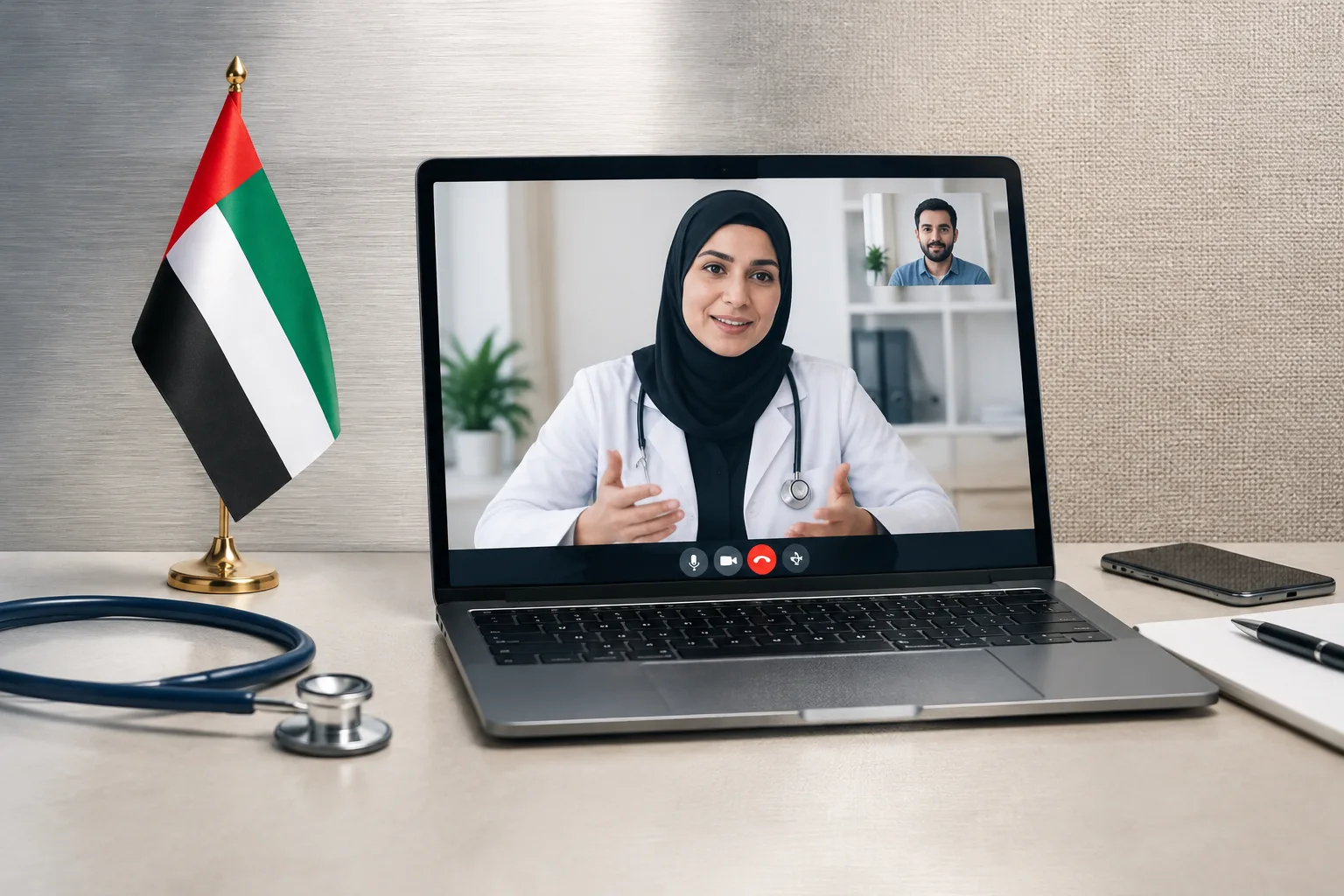
For most health-tech founders, telehealth looks like a software launch. Regulators treat it as a clinical service. Many founders build the platform first and ask about the license afterwards, which is the expensive order.
The DHA telehealth standards apply whether a consultation happens in a clinic or on a screen. Our guide explains what they cover, which authority applies, and how to decide on a structure before applying for your business license with Meydan Free Zone.
What DHA Telehealth Standards Cover
The DHA telehealth standards are the Dubai Health Authority's requirements for delivering healthcare remotely. They cover who may provide virtual care, licensing of providers and facilities, patient identification, consent, clinical records and the technology used. They apply to licensed practitioners treating patients in Dubai.
Scope of Remote Care Under DHA Oversight
A virtual consultation is a clinical service, so the same professional licensing logic applies. Founders often misread telehealth as a technology activity. Picture a founder who launches a consultation app with contracted doctors and holds only a technology trade license. The clinical service still needs DHA approval, and the app can't legally treat patients until it has it.
Who the Standards Apply To
- Licensed doctors, nurses and allied health professionals delivering care.
- Facilities and platform operators that facilitate consultations.
- A booking-only platform sits differently from one whose doctors diagnose and prescribe.
- Wellness and administrative support fall outside clinical care.
Who Approves What in a Telehealth Launch
| Feature | Requirement | Responsible Body |
|---|---|---|
| Business license and company formation | Trade license with a matching activity | Meydan Free Zone (for its companies) |
| Clinical facility and practitioner approval | Facility approval and practitioner licenses in Dubai | Dubai Health Authority |
| Federal health policy | Federal direction and licensing in the northern emirates | Ministry of Health and Prevention |
| Personal data protection obligations | Federal Law No. 2 of 2019 for health data; Federal Decree-Law No. 45 of 2021 for other personal data | Federal legislation, applied alongside the health regulator's rules |
| Telecommunications and digital infrastructure | Compliant connectivity and digital services | TDRA |
Which Authority Regulates Your Telehealth Activity

In Dubai, the Dubai Health Authority regulates healthcare providers and services. The Ministry of Health and Prevention sets federal health policy and licenses providers in the northern emirates, while Abu Dhabi’s Department of Health licenses providers there. The right authority depends on where the patient is treated and where the provider is licensed, so settle jurisdiction before you build.
Federal and Emirate-Level Roles
Rules don't apply uniformly across every emirate. Say a Dubai-licensed clinic serves a patient in another emirate. That patient may bring a different authority into scope, and your DHA telehealth standards compliance won't cover it automatically.
Where a Free Zone Company Fits
A free zone license governs the business entity, not clinical authority. A Meydan Free Zone company can hold the trade license while its practitioners hold DHA licenses.
Data, Privacy and Platform Compliance Rules
Telehealth platforms in the UAE must protect patient details under Federal Law No. 2 of 2019 on the use of ICT in health fields. It requires health data to be stored and processed inside the UAE unless an exception under Ministerial Resolution No. 51 of 2021 applies. The personal data protection law, Federal Decree-Law No. 45 of 2021, excludes health data covered by its own legislation, but it still applies to other personal data such as billing and marketing contacts.
Health Information Law and Data Localisation
Restrictions on moving health details abroad shape your cloud and vendor choices. A founder using an overseas video vendor must check where session records are stored. Choose hosting before launch, not after, because migrating live patient records is costly.
Technology and Consent Requirements
- Verify patient identity before the first consultation.
- Record consent, such as an electronic form signed before the first session.
- Use secure video and messaging with access controls.
- Keep consultation records for the retention period the DHA standards set.
How to Launch a Compliant Telehealth Service
To launch a compliant telehealth service in Dubai, define the clinical scope, choose your jurisdiction, secure the business license, obtain health regulator approval, set up compliant hosting, and document consent and record-keeping before accepting patients.
Step 1: Define the Clinical Scope
- List your services: consultations, prescriptions, counselling or referrals.
- Separate clinical from non-clinical activity.
- A counselling platform and a general practice service face different approvals. See how telemedicine business setup and licensing in Dubai works.
Step 2: Select the License and Jurisdiction
- Match the trade license activity to the service you deliver.
- Choose between a consultancy-type activity, such as a health consultancy license in Dubai, and a clinical activity.
- Review the telemedicine activity options Meydan Free Zone lists.
Step 3: Secure Regulator Approvals and Build Compliantly
- Obtain DHA approval for the facility and practitioners.
- Fix data hosting, consent flow and record retention before go-live.
- Finalise hosting before onboarding doctors, not after.
- Arrange residency visas for clinical and admin staff.
How Telehealth Fits a Meydan Free Zone Structure
Meydan Free Zone issues the business license digitally, while clinical authority stays with the health regulator. A free zone entity can suit digital health founders who want a digital-first corporate structure, provided practitioners and clinical activity meet regulator requirements separately.
What the Trade License Does and Does Not Cover
The license establishes the company and its permitted activity. It doesn't replace clinical approval. After registration, Meydan Free Zone issues the Business License, Certificate of Formation, Share Register and Memorandum and Articles of Association digitally. A healthtech startup in Dubai typically registers the entity first, then applies for health approvals.
Support Services Relevant to Health Founders
Streamlined Residency Solutions for Investors, Employees and Families
Explore mResidencyCompliance Risks Under DHA Telehealth Standards
The main risks are operating without the correct health approval, storing patient details in non-compliant locations, using unlicensed practitioners and keeping weak consent records. Each can lead to regulatory action or blocked banking relationships, so close them before accepting any paying patient.
Licensing and Practitioner Gaps
Every practitioner must hold the right professional license. A foreign specialist offering consultations to Dubai residents without a Dubai license is a clear breach of the DHA telehealth standards. Overseas doctors can't treat Dubai patients without approval.
Operational and Banking Consequences
Banks scrutinise regulated activity and often ask for regulator approval before activating a health-related account. Early IBAN issuance through partner banks doesn’t replace the bank’s own review before full activation. Budget compliance as a recurring cost, not a one-off launch task.
Next Steps for Founders
The DHA telehealth standards turn a software idea into a regulated clinical service. Founders who settle activity, jurisdiction and data handling first avoid rebuilding later. Approvals, hosting and consent records decide whether a platform can operate.
Conclusion
Define your clinical scope, confirm which authority covers it, choose the matching license activity and apply for your business license with Meydan Free Zone.
Ready to Launch Your Business in Dubai?
Let's Connect