Table of Contents
Frequently Asked Questions
1. Is there demand for British automation companies in the UAE?
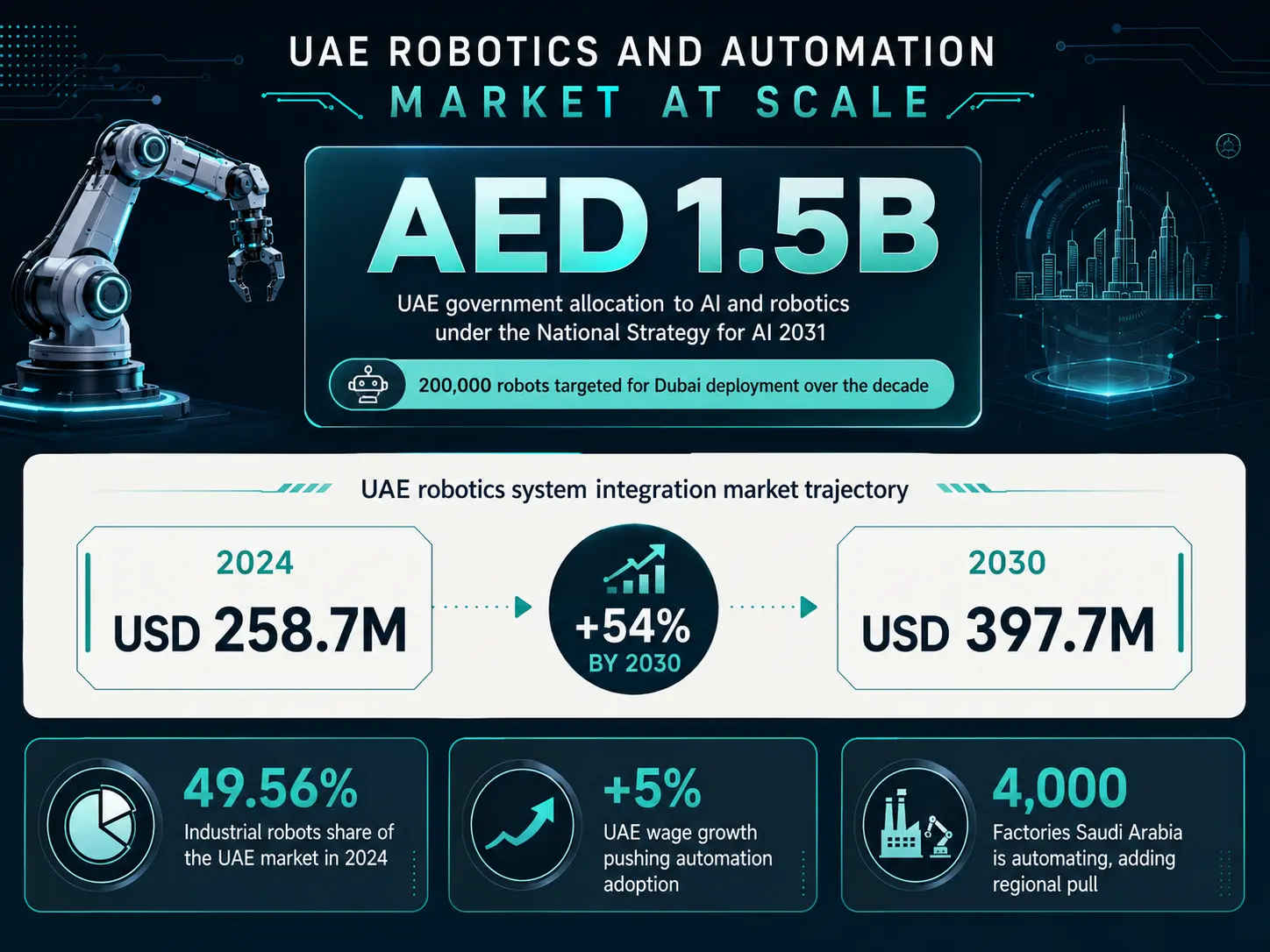
Yes. The UAE robotics system integration market generated USD 258.7 million in 2024, the government has allocated AED 1.5 billion to AI and robotics, and Dubai has targeted deployment of 200,000 robots over the next decade. Demand spans manufacturing, logistics, healthcare, construction, and food service.
2. Do British automation companies need a UAE entity to win contracts?
For most government, semi-government, and large industrial contracts, yes. UAE procurement typically requires a local trade license, AED invoicing capability, and the ability to provide local support. Without a UAE entity, British companies are usually limited to subcontracting or ad hoc project work.
3. Can a robotics company set up in the UAE without relocating?
Yes. Through Meydan Free Zone, British founders can incorporate fully online using only their passport, with a Fawribusiness license issued in under 60 minutes. Engineering and manufacturing stay UK-based, while the UAE entity handles contracts, invoicing, and client relationships.
4. What sectors are driving automation demand in the UAE?
Manufacturing and logistics lead, followed by healthcare, construction, food service, and retail. The UAE’s focus on Industry 4.0 and rising labour costs are accelerating adoption across all sectors.
5. What’s the fastest way to set up a British automation company in the UAE?
Meydan Free Zone offers fully digital company formation with a Fawri business license issued in under 60 minutes. No office, no local partner, and no travel required. Banking, visa, and operational support follow through Meydan’s integrated service model.
6. Does a British robotics company need a physical office in the UAE?
No. Free zone structures like Meydan Free Zone allow companies to operate without a physical office. Most British automation firms start with a commercial entity and add local presence—a commissioning engineer or business development hire — once the contract base justifies it.
Topic Summary
1. Enhancing Warehouse Efficiency
British robotics firms can provide advanced robotic arms and automated sorting systems to streamline parcel handling in UAE warehouses. These systems improve accuracy, reduce labor costs, and enable 24/7 operation, supporting the region’s growing e-commerce and logistics sectors.
2. Optimizing Manufacturing Processes
With expertise in automated guided vehicles (AGVs) and robotic assembly, UK companies can deliver tailored solutions for UAE’s manufacturing hubs like Jebel Ali. Automation reduces human error and increases throughput, boosting competitiveness in the automotive and aerospace industries.
3. Advancing Healthcare Robotics
British innovations in robotic-assisted surgery offer UAE medical facilities cutting-edge technology to enhance precision and patient outcomes. Partnerships with NHS research institutions bring proven solutions suitable for hospitals such as Medcare Royal, improving procedural efficiency.
4. Supporting Construction Automation
Robotics companies from the UK can supply automated machinery for complex tasks on construction sites in areas like Dubai Creek Harbour. Automated plastic molding and robotic material handling reduce project times and improve safety standards amid rapid urban development.
5. Enabling Smart City Development
By integrating AI-driven robotics and automation, British companies can contribute to the UAE’s smart city initiatives. Solutions that incorporate autonomous vehicles, intelligent monitoring, and automated maintenance align with the region’s vision of sustainable and technologically advanced urban environments.
How British Robotics and Automation Companies Can Serve UAE Industries
A UK robotics integrator that has automated dozens of warehouses at home and wants to bid on Gulf logistics contracts, an industrial automation firm watching Dubai's manufacturing base grow and wanting a local presence to match, a technical consultancy that keeps losing UAE tenders to firms with a local entity: all three run into the same wall, that winning serious automation contracts in the UAE takes a local commercial structure, not just a good product.
This guide covers the market opportunity for British automation companies in the UAE, what a local structure gets you, and how you set the business up in Dubai.
Key Stats at a Glance
The UK-to-UAE Opportunity for Automation
The UAE robotics market was worth USD 258.7 million in 2024 and is on track to reach USD 397.7 million by 2030, growth built on real demand from manufacturing, logistics, healthcare, construction, and food service, sectors the UAE government is actively pushing forward through initiatives such as Dubai 10X.
A British automation firm with a track record at home is well placed to bring proven systems into a market that is actively investing in this shift rather than merely talking about it.
UAE buyers, particularly government-linked and large corporate clients, tend to award serious automation and robotics contracts to firms with a registered local presence, since a local entity signals long-term commitment to servicing and supporting the system after installation rather than a one-off sale.
Who Your Customers Will Be
Your customer base spans manufacturers automating production lines to compete on cost and speed, logistics operators automating warehousing and fulfilment to handle rising e-commerce volumes, and healthcare, construction, and food service operators bringing in robotics and automation to solve specific labour and efficiency problems.
Dubai's 10X initiative and the wider UAE push toward advanced manufacturing and logistics give an automation firm a government-backed pipeline of demand across sectors, rather than a single client type to depend on, and Meydan Free Zone's access to over 2,500 business activities means a firm can register robotics system integration, industrial robotics, technical consultancy, or equipment trading all under one entity.
Meydan Free Zone or a Direct UK Structure
Selling into the UAE from the UK only needs no local setup, but a third party ends up owning the local relationship, the servicing commitment, and the tender eligibility that many buyers look for. A Meydan Free Zone entity lets you bid directly, keep the servicing relationship with your own client, and set up digitally in under 60 minutes through the Fawri license route, while keeping 0% corporate tax on qualifying UAE income.
[blockCTACostCalculator]
Step-by-Step Setup Guide
- Step 1, book your trade name: Check availability through your chosen free zone authority, confirming your activity covers robotics system integration, industrial robotics, technical consultancy, or equipment trading as needed.
- Step 2, prepare your setup documents: Passport copies of shareholders and directors and a business plan summary covering your target sectors.
- Step 3, get your initial approval and license: Meydan Free Zone's Fawri license route can complete company setup in under 60 minutes once your documents are ready.
- Step 4, open your corporate bank account: A local account lets you invoice UAE clients directly and receive payment without routing everything through a UK entity.
- Step 5, build your servicing and support capability: UAE buyers award repeat contracts to firms that can maintain and support installed systems locally, so plan for this from day one.
- Step 6, register with MOHRE if you employ staff: This sets your visa quota and puts your team under Wage Protection System compliance from the outset.
Compliance and What You Need in Place
Third-party approval
No specialist regulatory body approval is needed for standard robotics and automation trading and consultancy activity, which keeps your path to market simpler than in more heavily regulated sectors.
Anti-money laundering compliance
This activity carries no sector-specific anti-money laundering registration or reporting duties beyond the standard compliance framework that applies to all UAE businesses.
VAT and corporate tax
VAT registration is mandatory once your annual turnover crosses AED 375,000, and 9% corporate tax applies to net profits above the same threshold outside qualifying free zone income, so register directly through the Federal Tax Authority as your business grows.
Tender eligibility and local presence
Government-linked and large corporate buyers weigh local commercial presence heavily when awarding automation contracts, so a registered UAE entity with a real servicing plan strengthens your position well beyond what a UK-only sales relationship can offer.
Equipment import and certification
Specific robotics and automation equipment may carry its own import or safety certification depending on the sector you serve, so check what applies to your specific product line as you plan your first shipments.
Ongoing renewals
Renew your license every year, keep your VAT and corporate tax filings current, and keep your MOHRE registrations up to date if you employ staff.
Market Opportunity
The UAE robotics market is set to grow from USD 258.7 million in 2024 to USD 397.7 million by 2030, demand spread across manufacturing, logistics, healthcare, construction, and food service rather than concentrated in a single sector, giving a British automation firm several routes into the market rather than one narrow lane.
Government initiatives such as Dubai 10X back this growth with real policy commitment, which gives a new entrant more confidence in the durability of demand than a purely commercial forecast would.
A firm that registers locally through Meydan Free Zone and builds a real servicing capability is well placed to win the government-linked and large corporate contracts that often go only to firms with UAE presence, since buyers in this category treat local servicing ability as a proxy for long-term reliability.
Access to over 2,500 business activities through a single Meydan Free Zone entity also lets a firm combine system integration, consultancy, and equipment trading under one structure rather than juggling separate registrations.
Manufacturing and logistics operators racing to cut costs and handle rising volumes give an automation firm particularly durable demand, since these sectors treat automation as an ongoing investment rather than a one-off purchase, and a firm that wins an early contract with a strong support record tends to keep that client's business as their automation needs expand.
Conclusion
British Automation Companies Setting Up in the UAE is a workable move for a firm ready to compete on local presence rather than remote sales alone. Meydan Free Zone's fast setup, tax position, and access to a broad range of business activities give a UK automation firm a practical route into the UAE's growing robotics and automation market.
[blockCTAContact]
References





%20Startups%20in%20Dubai%20.webp)